
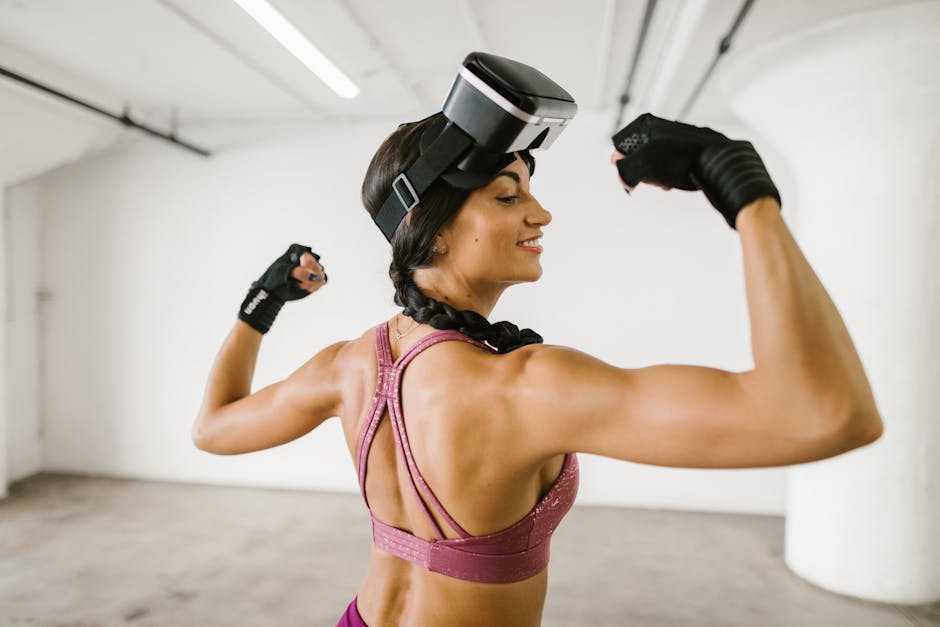
What’s Changing in the Training Room
A New Era of Training
Athletic training is evolving beyond cones and repetition. With the rise of virtual reality (VR), traditional drills are now merging with immersive technology to create smarter, more dynamic practice environments.
VR overlays game scenarios onto training drills
Creates a 360° environment for skill refinement and reflex training
Helps simulate real time pressure without physical toll
Smarter Sessions Through Tech
Coaches and athletes are no longer relying solely on intuition. With VR, sessions become more analytical, adjustable, and impactful.
Coaches design custom VR modules for different skill levels
Athletes receive guided feedback within the simulation
Enables repeatable drills in a distraction free digital environment
The Competitive Advantage
Ultimately, integrating VR into regular training routines leads to improved performance across the board.
Athletes make split second decisions faster
Reaction time and situational awareness improve rapidly
More training volume with less risk of fatigue or injury
Bottom line: VR isn’t replacing traditional training it’s sharpening it. Teams and individuals that adopt immersive tech early are gaining measurable edges in skill development and competitive execution.
VR in Real World Scenarios
Virtual reality isn’t just a flashy demo anymore it’s a core detail in modern training plans. Game speed drills that once came with the risk of injury or fatigue can now play out in safe, controllable environments. Quarterback under pressure? Point guard in the final seconds? VR drops them right into those moments, without burning physical reps.
What’s more, VR training is becoming ultra specific. Whether it’s linemen fine tuning snap reactions or outfielders adjusting to varied ball trajectories, modules are now built for roles not just sports. This kind of tailored feedback speeds up improvement, minus the grind.
Where VR really pulls ahead, though, is in recovery. Athletes rehabbing injuries can stay sharp mentally with simulated play even while sidelined. Muscle memory and game IQ don’t have to take a backseat. Healthy or not, there’s no time off in VR.
Pro Sports Are Already Onboard
Virtual reality isn’t stuck in the lab it’s already on the field, court, and ice. NFL quarterbacks are using VR to improve pre snap reads, visualizing defensive shifts and play progression without the hits. Instead of running full speed drills, they’re walking through scenarios at game speed in headsets, rewiring how they process under pressure.
In the NBA, players are training their spatial awareness through immersive simulations of crowded lanes, pick and roll situations, and off ball movement. These reps don’t just improve reaction time they sharpen how athletes see the floor and anticipate motion.
Soccer and hockey teams are going tactical. VR lets players walk through formations, learn set pieces, and study opponent patterns in a visceral, first person way. It’s bringing game film to life and giving athletes the mental edge before they ever step into the action.
Explore how virtual reality workouts are gaining ground in pro sports training
Data Driven Performance Gains
Forget guesswork. Coaches and athletes are leaning hard into the numbers, and VR is making that crystal clear. Real time tracking inside a virtual environment pulls useful metrics reaction time, focus consistency, split second decision quality. These aren’t just buzzwords. They show up in dashboards after each session, giving trainers evidence to back up changes instead of relying on gut instinct.
The analytics baked into VR platforms mean you’re not just training harder you’re training smarter. Over time, patterns surface. Maybe an athlete reacts 0.2 seconds slower under pressure when faced with a certain play setup. That insight isn’t obvious from regular drills but leaps out from VR data. Training can adjust accordingly.
The result? Fewer wasted reps, more targeted development. The feedback loop tightens. Coaches stop guessing and start optimizing. It turns talent development into a process clear, measurable, and scalable.
The Edge in Mental Game Prep
Performance starts in the mind. That’s where VR is earning its stripes not just as a training tool, but as a mental conditioning weapon. Athletes are using virtual reality for on demand visualization, running through plays and scenarios they’ll face on game day. It’s not theory; it’s muscle memory for the brain. By stepping into near real simulations, they can practice staying calm under pressure without ever stepping onto the field.
For athletes who struggle with anxiety under the lights, VR offers a form of controlled exposure therapy. They can simulate high stakes moments in safe, incremental reps. The more they face those conditions in training, the more reliable their response becomes in real life. Less panic. Sharper instincts.
And because there’s no physical toll, mental reps can scale. A quarterback can walk through dozens of blitz scenarios in a session. A striker can take shot after shot without burning out their legs. It’s not a replacement for field work it’s an edge before they even suit up.
Cost vs. Value: Is It Worth It?
High Costs, But Declining
Virtual reality technology still represents a significant investment for many sports organizations. However, pricing trends are promising. As hardware becomes more mainstream and production scales increase, the cost barriers are gradually coming down.
Base systems are more affordable than two years ago
Subscription based VR platforms are reducing upfront costs
Bulk adoption by teams has led to more competitive pricing
Return on Investment is Rising
While the initial price tag can be steep, the long term gains are shifting the perception of VR in training. Organizations committed to performance improvement are finding the trade offs more than worthwhile.
Measurable improvement in reaction time and decision making
Customizable modules reduce time spent on ineffective drills
Supports player recovery, reducing risk of re injury and lost time
From Experimental to Essential
What once felt like a novelty is now becoming a cornerstone of modern athletic development. Coaches, trainers, and management are seeing VR not just as a cool tech tool, but as a competitive requirement.
Growing number of teams integrating VR into daily routines
Acceptance across multiple sports leagues
Enhanced outcomes in both physical and mental training modules
Dig deeper into how virtual reality workouts are changing pro sports
What Trainers Should Watch Next
As VR technology quickly matures, trainers and coaches need to be prepared for another wave of transformation. We’re moving beyond novelty and into an era where virtual reality becomes a foundational part of athletic training from warm up to game day prep.
Lightweight, Portable VR Gear
The next generation of VR hardware is designed with mobility in mind. What once required bulky setups and dedicated spaces is being replaced with gear that’s easier to transport and integrate into a team’s daily routine.
Wireless, standalone VR headsets with longer battery life
Compact accessories that reduce setup time
Mobile compatibility for on the go sessions ideal for teams in transit
These advancements mean more flexibility and quicker adoption across all levels of sport, from elite programs to youth academies.
AI + VR = Fully Personalized Training
Artificial intelligence is becoming the secret weapon behind smarter VR sessions. When combined with immersive simulations, AI can:
Adapt drills in real time based on player performance
Detect patterns and weaknesses coaches might miss
Generate custom routines tailored to position, skill level, and injury status
This pairing offers a truly individualized experience, helping athletes train more efficiently and with greater intent.
From Add On to Essential
VR is no longer an extra it’s becoming a necessity. As more success stories emerge from pro teams using VR, expectations are shifting:
Training facilities are investing in VR as a core fixture, not a luxury
Athletes now see it as crucial to gaining and maintaining a competitive edge
Programs that delay adoption may begin to fall behind in athlete development
In short, VR is moving from experimental tech to a non negotiable asset for any high performance sports environment.